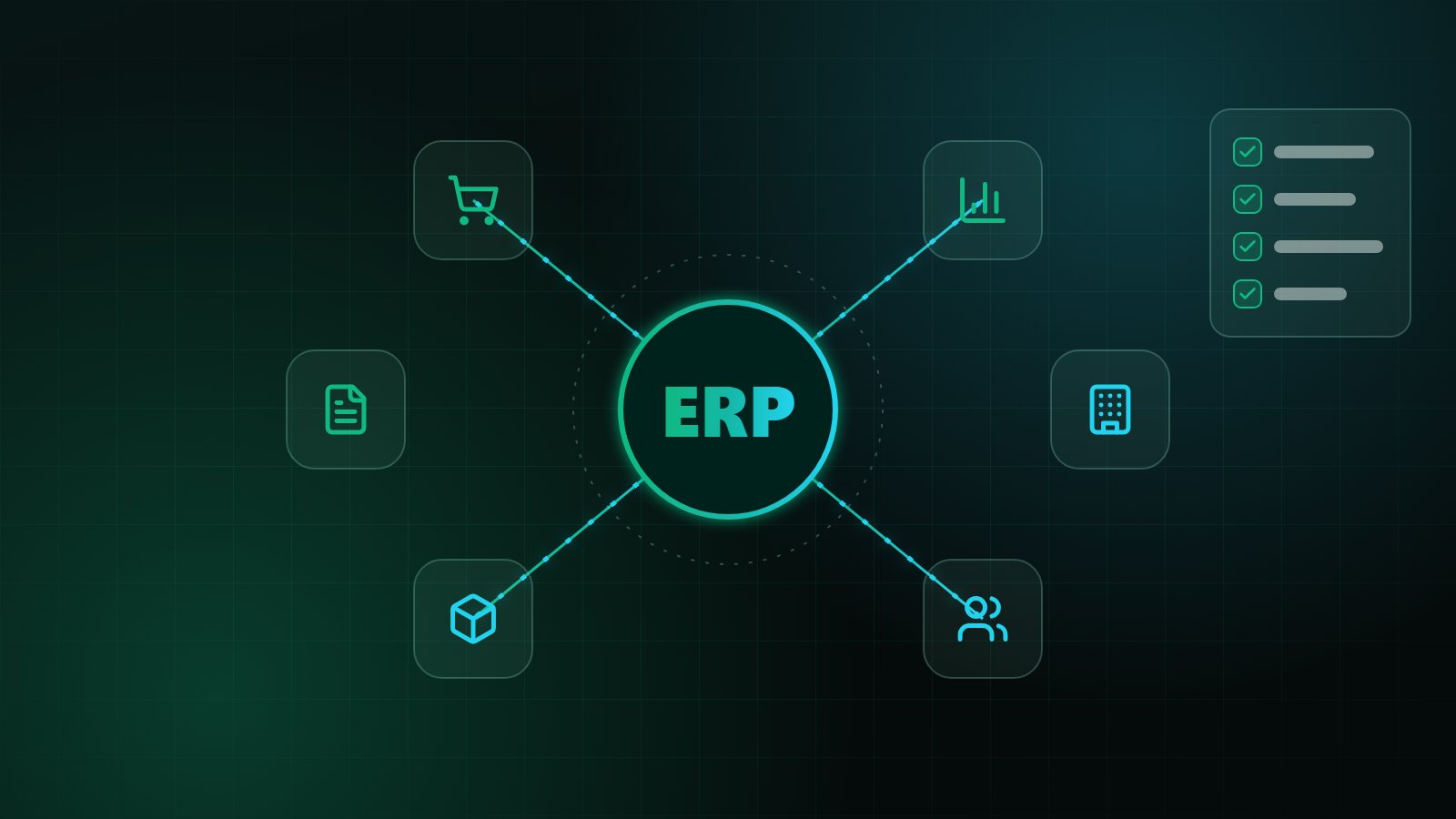
An ERP (Enterprise Resource Planning) system connects your sales, purchasing, inventory, accounts and HR in one place. When it fits your business, it saves hours every day and gives you a clear, real-time view of every branch and warehouse. When it doesn't, staff quietly go back to Excel and registers, and the investment is wasted.
Before you choose an ERP for your business in Bangladesh, ask these seven questions.
Key takeaways
- Choose software that fits how you actually work, not the other way round.
- Confirm VAT-compliant invoicing, local payment methods and multi-branch support.
- Compare total cost over three to five years, not just the license price.
- Make sure you own your data and can export it at any time.
1. Does it match how we actually work?
List your key processes first: how an order becomes a challan and an invoice, how stock moves between warehouse and branches, how purchases are approved, how dealer credit is managed. Then check how the software handles each one. If you need to change your whole way of working to fit the software, think carefully.
2. Does it handle Bangladesh-specific requirements?
Many imported ERP systems were not designed for local business. Ask about:
- VAT invoicing, including Mushak-6.3 tax invoices and VAT reports.
- Payment methods such as cash, bank, cheque, bKash, Nagad and card, with proper reconciliation.
- Dealer and distributor credit, commissions and collection tracking.
- Bangla on invoices, challans and reports where you need it.
- Payroll that matches your salary structure, attendance and festival bonuses.
3. Can it be customized, and who will do it?
Every business has its own rules: special pricing, approval chains, report formats. Ask whether these can be configured, and whether the vendor can build changes for you later as your business grows.
4. Will it connect with our other systems?
Your ERP may need to work with a point-of-sale system, an e-commerce website, payment gateways such as SSLCommerz, SMS services or bank files. Ask about integrations and APIs before you buy, not after.
5. Can our team learn it quickly?
The most powerful system is useless if staff avoid it. Look for a clean, simple interface, and ask for a demo using your own example transactions. Check whether training in Bangla is included, both at launch and for new staff later.
6. What support will we get, and what is the real cost?
Problems usually appear at month-end or during VAT submission. Ask how quickly support responds, whether it is local, and whether updates are included.
Then calculate the total cost: setup, data migration, customization, training, hosting or server, annual support and future user licenses. A slightly higher upfront cost with good local support is often cheaper over three to five years.
7. Who owns our data, and how is it protected?
Your data belongs to you. Ask how it is backed up, who can access it, whether you can export it at any time, and what happens if you change providers. Also ask how the system behaves during power or internet outages.
Red flags when evaluating vendors
- They can't show the software working with your sample transactions.
- Every change you ask about is "possible later" but nothing is written into the agreement.
- No clear answer about data export or backups.
- Support is only by email, from another time zone.
- Pricing is unclear about users, branches or yearly renewals.
Frequently asked questions
Off-the-shelf or custom ERP: which is better?
Off-the-shelf systems are quick to start but can be rigid. A custom ERP is built around your exact processes and grows with you, which often makes it the better choice for businesses with specific workflows, multiple branches or industry-specific needs.
How long does it take to implement an ERP?
It depends on the number of modules, branches and the state of your existing data. Starting with core modules such as sales, inventory and accounts, then adding others in phases, keeps the project manageable.
Can an ERP generate VAT-compliant invoices in Bangladesh?
It should. Make sure the system can produce Mushak-6.3 tax invoices and the VAT reports your accountant needs, and ask to see a sample.
Can we use the ERP from multiple branches?
Yes, a web-based ERP can be used from any branch or warehouse with an internet connection, with stock and sales visible centrally in real time.
Next step
Write down your processes, your must-have reports and your integration needs, then ask vendors to show exactly how they would handle them.
At Creation Plus we build custom ERP and business software for Bangladeshi businesses, with automation and analytics built in. Get in touch to discuss your requirements.